
Fire Alarm Services
Fire Alarm System Requirements in Nigeria for Commercial Buildings (2026 Guide)
If you own or manage a commercial building in Nigeria, fire alarm system requirements are not optional extras.
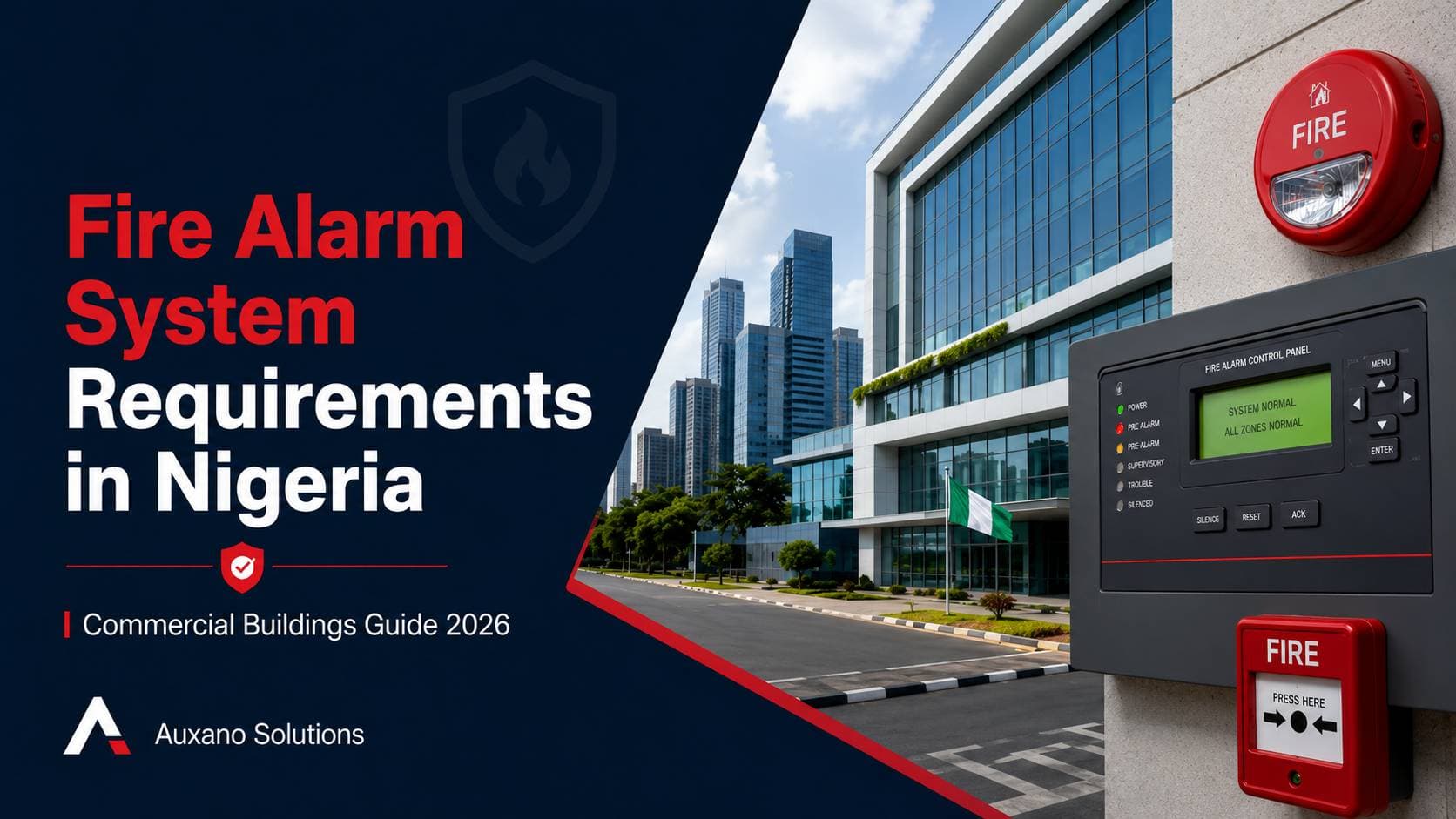
Fire safety is no longer optional for commercial buildings in Nigeria. Whether you own an office complex, shopping mall, hotel, hospital, warehouse, school, manufacturing facility, or oil and gas installation, having a properly designed fire alarm system is essential for protecting lives, assets, and business operations.
Yet many property owners still ask:
What are the fire alarm system requirements in Nigeria for commercial buildings?
The answer goes beyond simply installing smoke detectors or a fire alarm panel. A compliant fire alarm system must be designed, installed, tested, commissioned, and maintained according to recognized standards and regulatory requirements.
In this guide, Auxano Solutions explains what commercial property owners need to know about fire alarm system requirements in Nigeria and how to ensure their buildings remain safe and compliant.
Why Fire Alarm Systems Are Required in Commercial Buildings
A fire can spread rapidly, causing injury, loss of life, property damage, operational downtime, and regulatory penalties.
A properly designed fire alarm system helps:
- Detect fire in its early stages
- Alert occupants immediately
- Support safe evacuation
- Reduce property damage
- Improve emergency response
- Support regulatory compliance
- Protect business continuity
Modern fire alarm systems are designed to provide early detection and notification so occupants can respond before a small incident becomes a major disaster.
Fire Alarm System Requirements in Nigeria
Although specific requirements vary depending on the building type, occupancy, risk profile, and local authority requirements, most commercial buildings should have the following components.
1. Fire Risk Assessment
Before any fire alarm system is designed, a fire risk assessment should be conducted.
A fire risk assessment evaluates:
- Building occupancy
- Number of occupants
- Escape routes
- High-risk areas
- Electrical rooms
- Kitchens
- Storage areas
- Business continuity risks
The fire alarm design should be based on the findings of the risk assessment rather than simply selecting equipment. Industry standards recognize the risk assessment as the foundation of fire alarm system design.
2. Fire Detection Devices
Commercial buildings typically require fire detection devices capable of identifying signs of fire as early as possible.
These may include:
- Smoke detectors
- Heat detectors
- Multi-sensor detectors
- Beam detectors for large spaces
The type and placement of detectors depend on the environment and identified risks within the building.
3. Fire Alarm Control Panel
Every commercial fire alarm system requires a central control panel.
The control panel:
- Receives alarm signals
- Identifies activated zones
- Monitors system health
- Initiates alarm notifications
- Supports emergency response actions
For larger facilities, addressable fire alarm systems are often preferred because they provide detailed information about the exact location of an alarm event.
4. Audible and Visual Alarm Devices
Occupants must be able to hear or see the alarm when activated.
Commercial buildings commonly require:
- Alarm sounders
- Sirens
- Horns
- Flashing strobes
- Visual indicators
Alarm devices should be positioned to ensure effective notification throughout the building. Proper audibility and visibility are critical parts of fire alarm system design.
5. Manual Call Points
Manual call points allow occupants to activate the alarm system when they discover a fire before automatic detectors respond.
These devices are typically installed:
- Near exits
- Along escape routes
- At strategic locations throughout the facility
6. Backup Power Supply
Commercial fire alarm systems should continue operating during power outages.
A compliant system generally includes:
- Primary mains power
- Backup batteries
- Automatic power transfer capability
This ensures the system remains functional during emergencies.
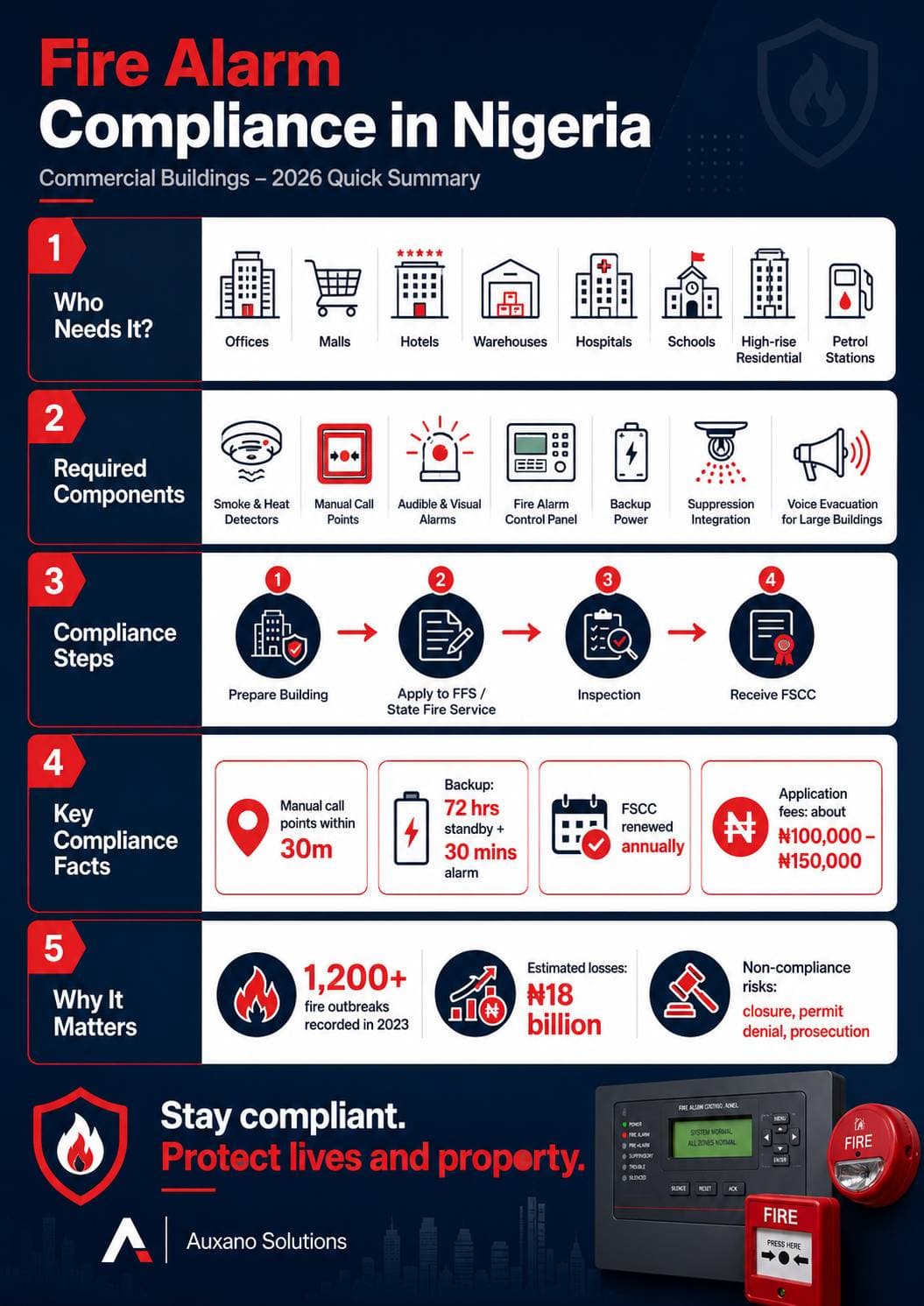
Nigerian Fire Safety Compliance Requirements
Commercial building owners should ensure compliance with relevant regulatory requirements, including:
- Federal Fire Service (FFS) requirements
- State Fire Service regulations
- National Building Code (NBC)
- Site-specific authority requirements
Depending on the building type and occupancy classification, additional requirements may apply during approval and inspection processes.
Because requirements can vary by state and project type, it is advisable to work with experienced fire safety professionals familiar with local regulations.
International Standards Commonly Used in Nigeria
Many commercial projects in Nigeria are designed using internationally recognized fire alarm standards.
These standards commonly include:
NFPA 72
NFPA 72 provides guidance for:
- Fire alarm system design
- Installation
- Testing
- Inspection
- Maintenance
- Emergency communication systems
BS 5839
BS 5839 provides recommendations for:
- Fire detection systems
- Alarm coverage categories
- Installation requirements
- Commissioning procedures
- Maintenance requirements
BS 5839 is widely used for commercial fire alarm systems and provides guidance on design, installation, commissioning, and maintenance.
Fire Alarm System Maintenance Requirements
Installing a fire alarm system is only the beginning.
To remain effective, systems should undergo:
- Routine inspections
- Functional testing
- Preventive maintenance
- Fault diagnosis
- Component replacement when necessary
- System upgrades when required
Industry standards emphasize that compliance is an ongoing process that includes inspection, testing, commissioning records, and periodic maintenance.
Common Mistakes Commercial Property Owners Make
Many buildings experience fire safety issues because of:
- Poor system design
- Inadequate detector coverage
- Lack of maintenance
- Ignoring fire risk assessments
- Improper installation
- Failure to test systems regularly
- Delayed repairs
These issues can reduce system effectiveness and create compliance challenges during inspections.
Why Businesses Choose Auxano Solutions
With over 15 years of experience, Auxano Solutions helps organizations across Nigeria design, install, commission, inspect, and maintain reliable fire alarm systems that protect people, property, and operations.
Our services include:
- Fire alarm system design
- Fire alarm installation
- Fire alarm commissioning
- Fire alarm testing
- Fire alarm maintenance
- Fire safety compliance support
- System upgrades and modernization
- Integrated fire protection solutions
We design every solution around the building, occupancy, operational risks, and compliance requirements—ensuring the system works correctly from day one.
Conclusion
Understanding the fire alarm system requirements in Nigeria is critical for every commercial property owner. Compliance is not simply about installing equipment—it requires proper design, risk assessment, installation, testing, commissioning, and ongoing maintenance.
Whether you are developing a new facility or upgrading an existing building, investing in a professionally designed fire alarm system can help protect lives, reduce risk, and support regulatory compliance.
If you need expert guidance on fire alarm system requirements in Nigeria, contact Auxano Solutions for a professional consultation and site assessment.